Art of the American West
1830 – 1909
Missouri River portraits, Rocky Mountain panoramas and Remington bronzes - the West as nineteenth-century artists recorded and imagined it
About Art of the American West
"Art of the American West" is not the name of a school with a manifesto. It is a convenient label for a body of nineteenth-century pictures made by artists who traveled - or claimed the authority of having traveled - west of the Mississippi, and for the much larger audience in New York, Washington, London and Paris that paid to look at them. The pictures in this archive run from the 1830s, when the upper Missouri River was fur-trade…
Read full biography →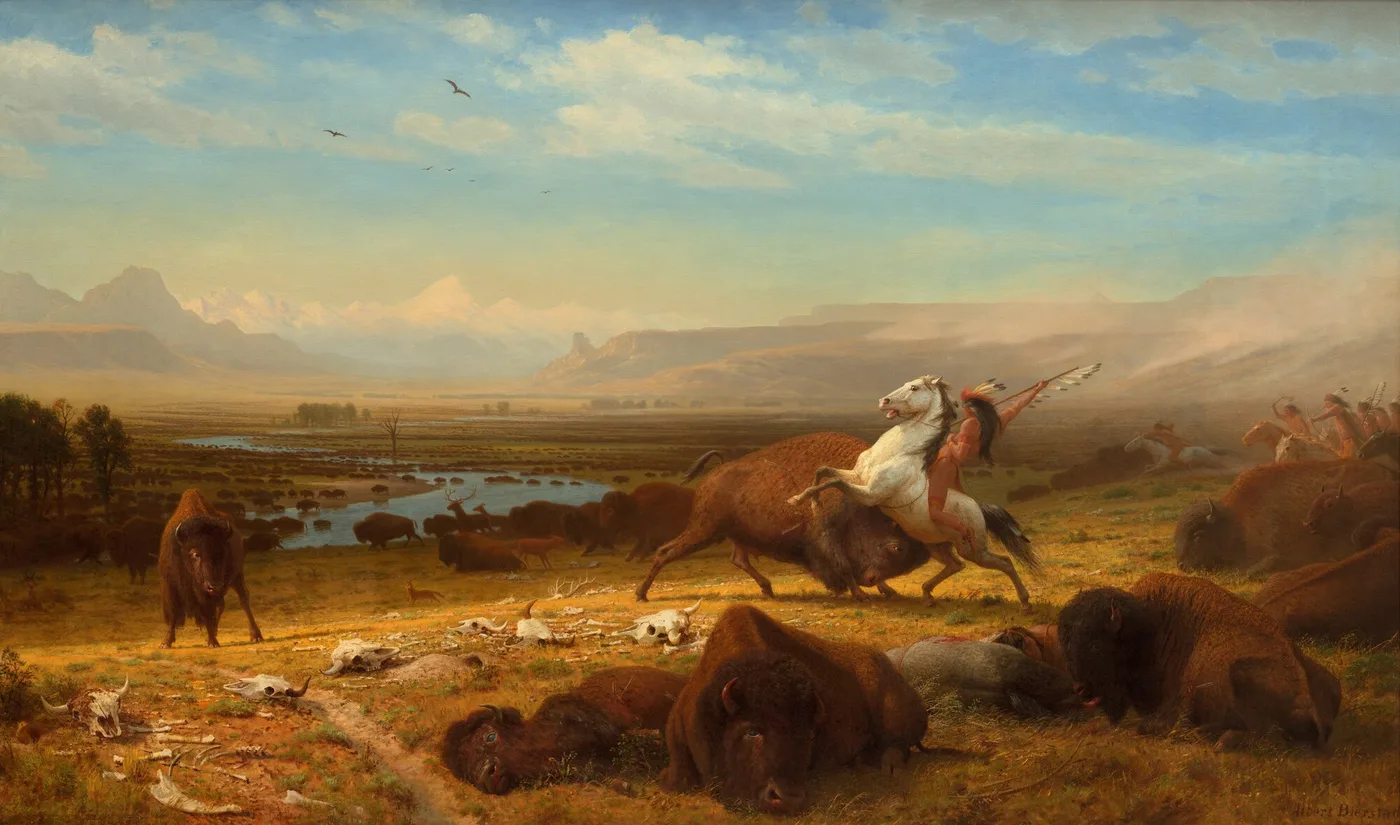
Notable Works
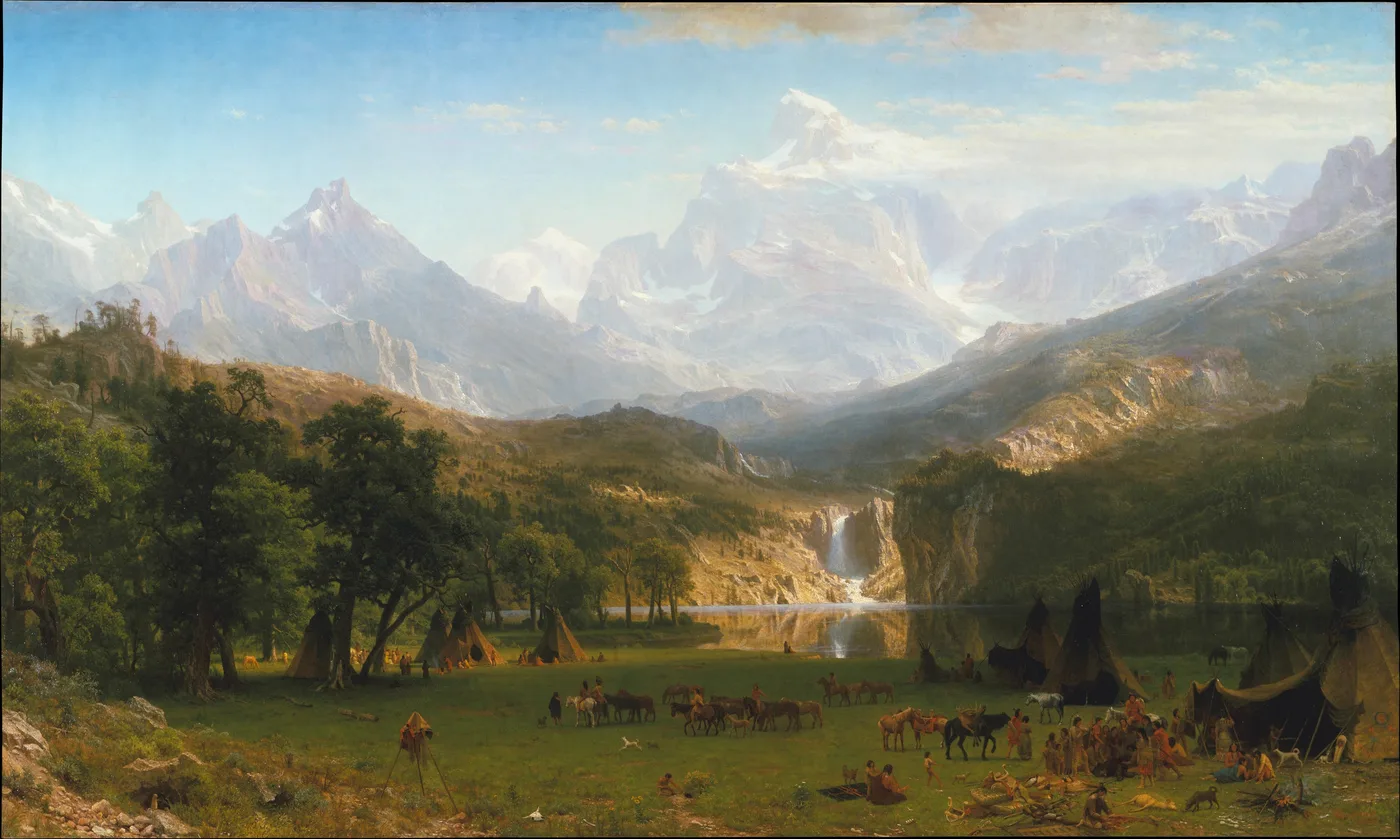
The Rocky Mountains, Lander's Peak
Albert Bierstadt's breakthrough canvas, based on sketches from Frederick W. Lander's 1859 survey party. A Shoshone encampment fills the foreground below an idealized peak in the Wyoming Range, named…
Browse the collection →The Last of the Buffalo
Bierstadt's last large canvas assembles a mounted buffalo hunt from sketches of earlier western trips, painted after the great herds had been hunted nearly to extinction. Given by the artist's widow…
Browse the collection →Mount Starr King, Yosemite
Painted in New York from sketches made during Bierstadt's 1863 visit to Yosemite Valley. The Cleveland Museum of Art notes that the two Native travelers with a packhorse acknowledge the Indigenous…
Browse the collection →Timeline
George Catlin goes to St. Louis, where William Clark becomes his mentor; St. Louis is the base for his five trips of 1830-1836, during which he visits some fifty tribes
Catlin travels more than 2,000 miles up the Missouri to Fort Union, painting Mandan, Hidatsa, Crow, Assiniboine, Blackfeet and other nations, and calls for 'a nation's Park'
Prince Maximilian of Wied-Neuwied and Karl Bodmer sail for America on May 17, landing in Boston on July 4
In April Maximilian and Bodmer leave St. Louis up the Missouri, reach Fort McKenzie, and winter at Fort Clark beside the Mandan villages
Alfred Jacob Miller travels to the Rocky Mountains with Sir William Drummond Stewart, reaching Fort William and the Green River
"A nation's Park, containing man and beast, in all the wild and freshness of their nature's beauty!"
— Art of the American West